Vegan Meat Binding Enzyme Supplier Guide
Plant-based meat factories need binding systems that do more than hold a patty together on a lab bench. The right enzyme program must support fibrous bite, juiciness retention, clean slicing, cold-chain resilience, and repeatable performance across real production variability.
Enzymefusion supplies enzyme solutions for manufacturers building vegan-positioned meat analogues, hybrid plant-protein textures, formed products, and extruded formats. We work with R&D, procurement, QA, and plant operations to connect binding chemistry with process reality.
If you are qualifying an enzyme supplier for plant based meat manufacturing, this guide outlines the key technical and commercial questions to resolve before factory trials.
Binding is a process variable, not just an ingredient choice
In plant-based meat, binding performance is shaped by the full formulation and thermal history:
- Protein source, denaturation state, and hydration behavior
- Fat phase structure and emulsification strategy
- Salt system, pH, and ionic strength
- Shear profile during mixing, forming, extrusion, or filling
- Hold time before cooking or freezing
- Thermal set profile and post-process handling
A binding enzyme should be selected around the target eating texture and the plant’s process window, not only the supplier’s brochure claim.
What vegan-positioned buyers need to clarify
For vegan, plant-based, or animal-free positioning, the enzyme discussion often becomes a cross-functional review. Enzymefusion supports this early so the trial does not stall after technical success.
Source and positioning
Many binding enzymes used in meat and meat analogue systems are produced by controlled microbial fermentation. For vegan-positioned products, buyers typically evaluate:
- Production organism and fermentation-derived origin
- Absence of animal-derived carriers or processing inputs where required by the brand standard
- Suitability for internal vegan, vegetarian, or plant-based policies
- Documentation needed for retailer, foodservice, or private-label programs
Ingredient declaration planning
Declaration expectations vary by market, format, claim set, and regulatory interpretation. Enzymefusion helps teams prepare the right documentation package for discussions with internal regulatory counsel and external customers.
Typical review items include:
- Ingredient versus processing aid assessment pathways
- Label naming conventions for the target market
- Allergen and carrier review
- Non-GMO, kosher, halal, or vegan documentation requests where applicable
- Specification alignment with finished-product quality systems
We do not replace regulatory counsel. We make the enzyme file easier for regulatory and QA teams to evaluate.
Where binding enzymes create factory value
A well-selected binding enzyme can improve manufacturing control in several high-value areas.
Formed patties and grounds
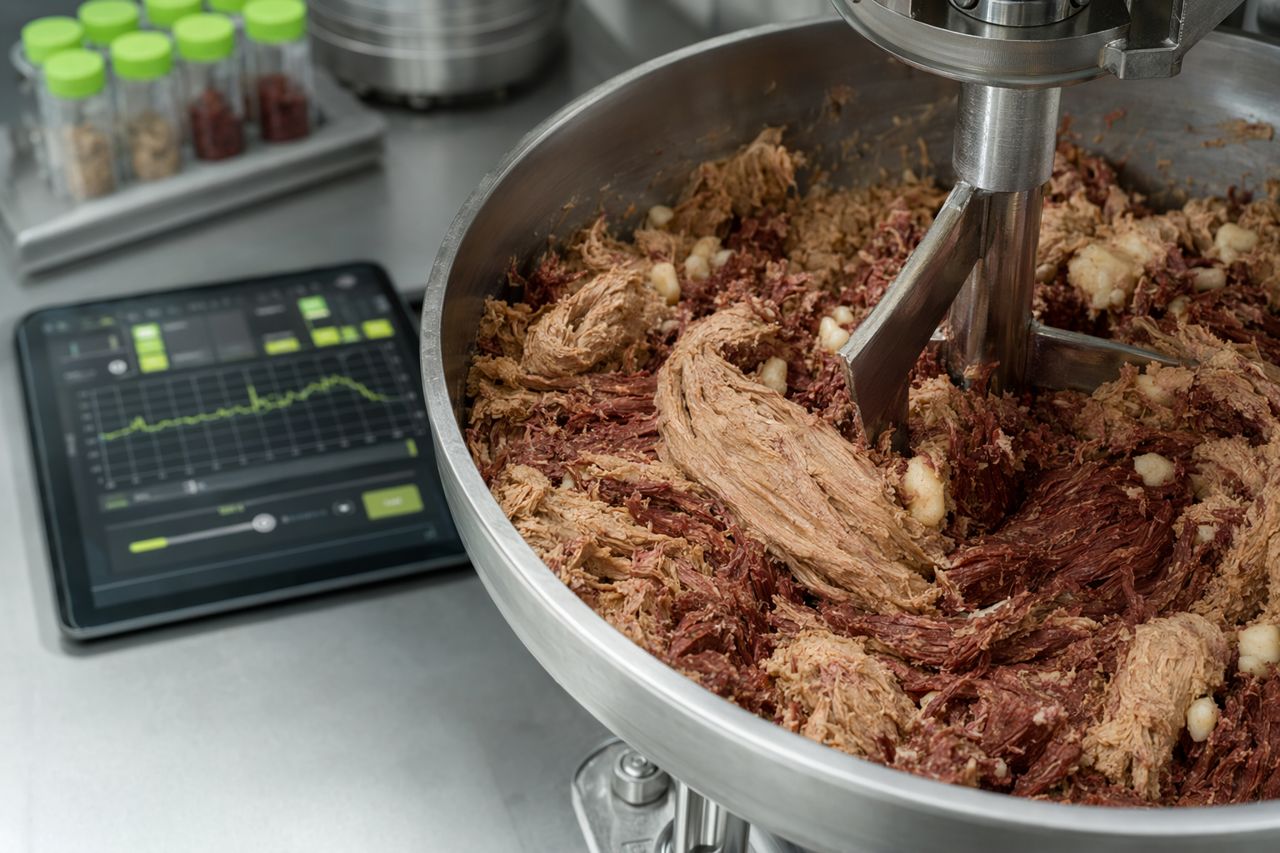
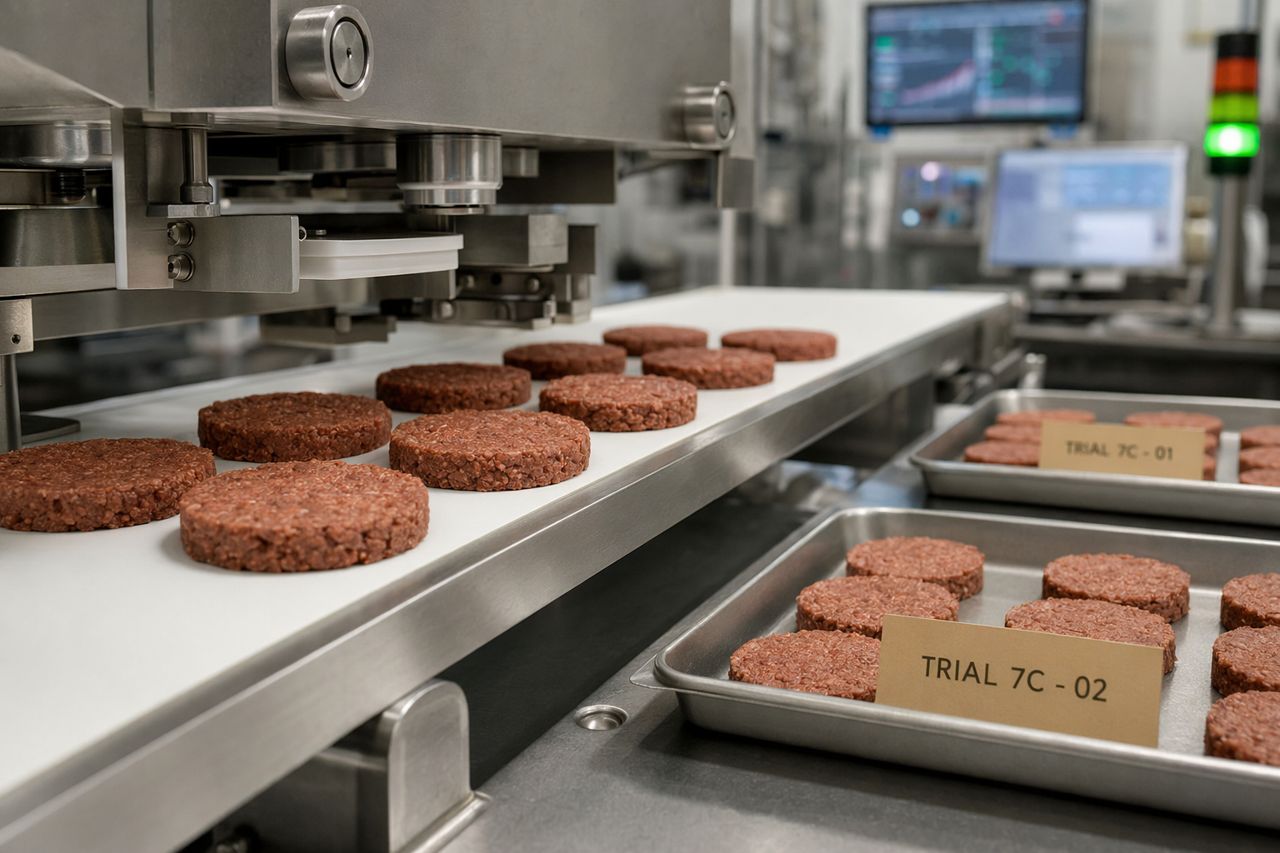
Binding enzymes can help reduce crumble, improve bite integrity, and support particle-to-particle cohesion after forming, chilling, freezing, and cooking. This is especially relevant when working with hydrated textured vegetable protein, pea protein, soy protein, wheat protein, fava, mycoprotein blends, or multi-protein systems.
Sausages, meatballs, and filled formats
For filled or shaped products, binding must balance pumpability with final firmness. The enzyme program should preserve line handling while supporting cook yield, slice strength, and casing or skin interaction.
High-moisture extrusion and structured formats
In extruded systems, the binding strategy must respect shear, temperature, moisture, and residence-time constraints. The goal is not simply stronger gelation. The goal is aligned structure, controlled chew, and process stability.
Marbled and layered analogues
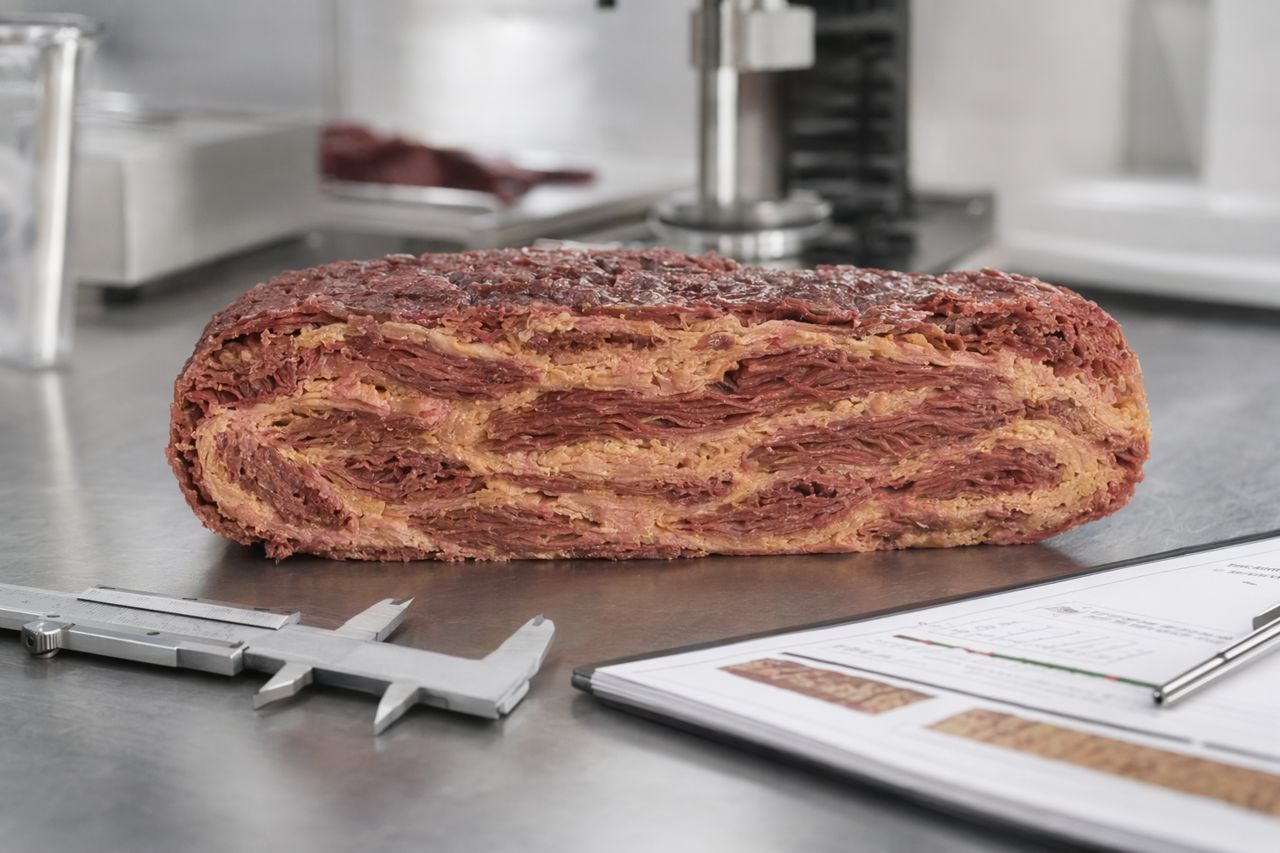
For modern whole-cut concepts, binding enzymes may be evaluated alongside lipid structuring, protein lamination, and hydration control. Enzymefusion helps teams determine whether the enzyme should drive cohesion, surface adhesion, internal bite, or post-cook integrity.
Common failure modes in plant-based binding trials
Many enzyme evaluations fail because the first trial asks the wrong question. We help manufacturers avoid these predictable issues:
- Over-firm texture that reads rubbery rather than fibrous
- Binding that improves after cooking but fails during forming or freezing
- Inconsistent performance between pilot batches and production-scale lots
- Enzyme response masked by poor hydration or under-developed protein structure
- Excessive dependency on long hold times that do not fit plant scheduling
- Strong lab performance that creates labeling or customer approval delays
A good supplier should help separate enzyme limitations from formulation, equipment, and process-window effects.
Trial planning for factory teams
Enzymefusion structures trials around decision points that matter to plant-based meat manufacturers.
1. Define the texture target
Before recommending an enzyme approach, we clarify whether the target is:
- Cohesive minced bite
- Sausage-style snap and slice
- Juicy burger bind with low crumble
- Fibrous whole-cut pull
- Delicate seafood-style flake
- Dense deli-style sliceability
Each target requires a different balance of hydration, protein interaction, fat phase stability, and thermal set.
2. Map the process window
We review the actual production constraints: mixing order, hydration time, forming temperature, line speed, thermal process, freeze-thaw exposure, and packaging format. This prevents a lab-only enzyme condition from becoming impossible to scale.
3. Build a practical trial matrix
Rather than testing dozens of disconnected variables, we recommend focused trial sets that compare enzyme inclusion, process timing, and formulation adjustments against measurable factory outcomes.
Relevant outputs may include:
- Forming performance
- Cook loss and purge behavior
- Bite firmness and elasticity
- Slice or pull strength
- Freeze-thaw stability
- Sensory texture notes from trained internal panels
- Line handling and rework tolerance
4. Align documentation before scale-up
For vegan-positioned products, technical success is only part of supplier qualification. We support QA and procurement with the documentation needed for internal review, customer questionnaires, and commercial onboarding.
What to expect from Enzymefusion
Enzymefusion is built for technical buying teams. We do not position enzyme selection as a generic additive swap. We help connect enzyme functionality to formulation design, equipment behavior, finished-product texture, and compliance documentation.
You can expect:
- Application-focused recommendations for plant-based meat systems
- Support for vegan-positioning and ingredient declaration discussions
- Trial planning for pilot and production environments
- Clear documentation for QA, procurement, and customer review
- Practical guidance on scale-up risks before full-line commitment
Request a quote
Tell us what you are making, the protein base, target texture, current binding challenge, and planned trial scale. Enzymefusion will review the application and respond with a recommended enzyme approach and quotation pathway.