Fat Systems, Juiciness and Bite in Plant-Based Meat Factories
Fat is not only a flavor carrier in plant-based meat. It is a structural variable. In a factory environment, the fat phase has to survive pumping, mixing, hydration, shear, thermal exposure, forming and packaging without bleeding too early or disappearing into a dry protein matrix.
For R&D and operations teams, the question is rarely “which fat tastes best?” The harder question is: which fat system gives the target bite, visible marbling, controlled cook loss and repeatable juiciness at line speed?
That is where enzyme-enabled process design becomes useful. Enzymefusion supplies enzymes in bulk to plant-based meat manufacturers, co-packers and ingredient resellers who need practical control over protein network behavior, water management and texture formation across scale-up.
Wholesale and bulk supply for manufacturers, co-packers and resellers. Enzymefusion supplies these enzymes by quote only; pack size, volume and delivery are quoted per order. To get a quote, send the product, the quantity and the destination country through the inquiry form.
Why Juiciness Fails at Factory Scale
Small-batch prototypes often look convincing because the fat is handled gently, chilled carefully and cooked immediately. Factory production exposes weak points.
Common failure modes include:
- Fat smearing during high-shear mixing or extrusion feed preparation
- Dry bite after retort, pasteurization or high-temperature cook steps
- Oil separation during thaw, reheating or grilling
- Rubbery protein networks that trap water but do not release it cleanly
- Soft, pasty bite when fat load increases
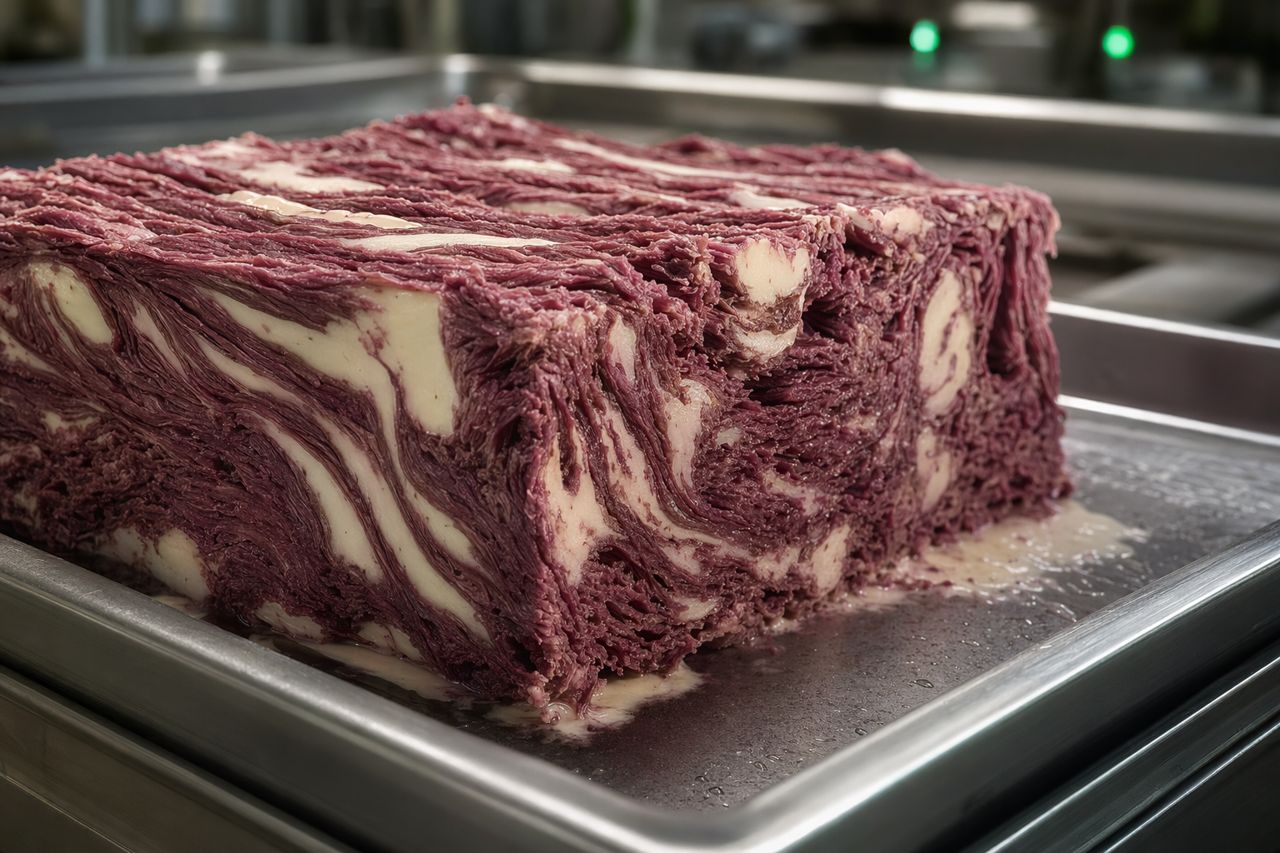
- Inconsistent marbling because the fat phase cannot hold its geometry
These issues are not isolated formulation defects. They are usually interactions between protein hydration, particle size, thermal set, lipid crystallization, emulsifier choice, salt system, shear history and enzyme response.
Fat Is a Process Material, Not a Garnish
Plant-based meat factories typically use one or more fat strategies:
Solid fat inclusions
Coconut, palm fractions, shea fractions or structured fat pieces can create visual marbling and cook-stage melt. The challenge is controlling particle integrity through mixing and forming. If the inclusion softens too soon, the matrix becomes greasy before it becomes juicy.
Emulsified fat systems
Pre-emulsified oil systems can distribute lipid more evenly and improve bite continuity. They depend on protein functionality, hydrocolloid support and processing temperature. A stable emulsion in a beaker can still fail in a pump, extruder or depositor.
Encapsulated or gelled fat phases
Gelled oil, oleogel and encapsulated fat approaches help separate fat behavior from protein hydration. These systems can support controlled release, but they require careful alignment with thermal profile and mechanical handling.
Hybrid fat architecture
Many successful factory formulas combine distributed fat for baseline succulence with larger inclusions for visible marbling and burst release. The enzyme system should support the surrounding protein network without locking the fat so tightly that the finished bite feels dry.
The Protein Network Sets the Juiciness Window
Juiciness is not only how much water and fat are present. It is how the matrix holds and releases them under compression, heat and chewing.
A useful plant-protein network needs to do several things at once:
- Hydrate quickly enough for production timing
- Develop elasticity without becoming bouncy
- Hold fat during forming and packing
- Release fat and moisture during cooking and eating
- Maintain bite after chilled or frozen storage
- Stay consistent when raw material variability shifts protein behavior
Enzymes can help tune this network by modifying protein interactions, improving matrix cohesion, supporting tenderness targets or helping build a more controlled structure around fat and water. The objective is not maximum reaction. The objective is the right texture window for the product format.
Product Format Changes the Fat Strategy
Burgers and patties
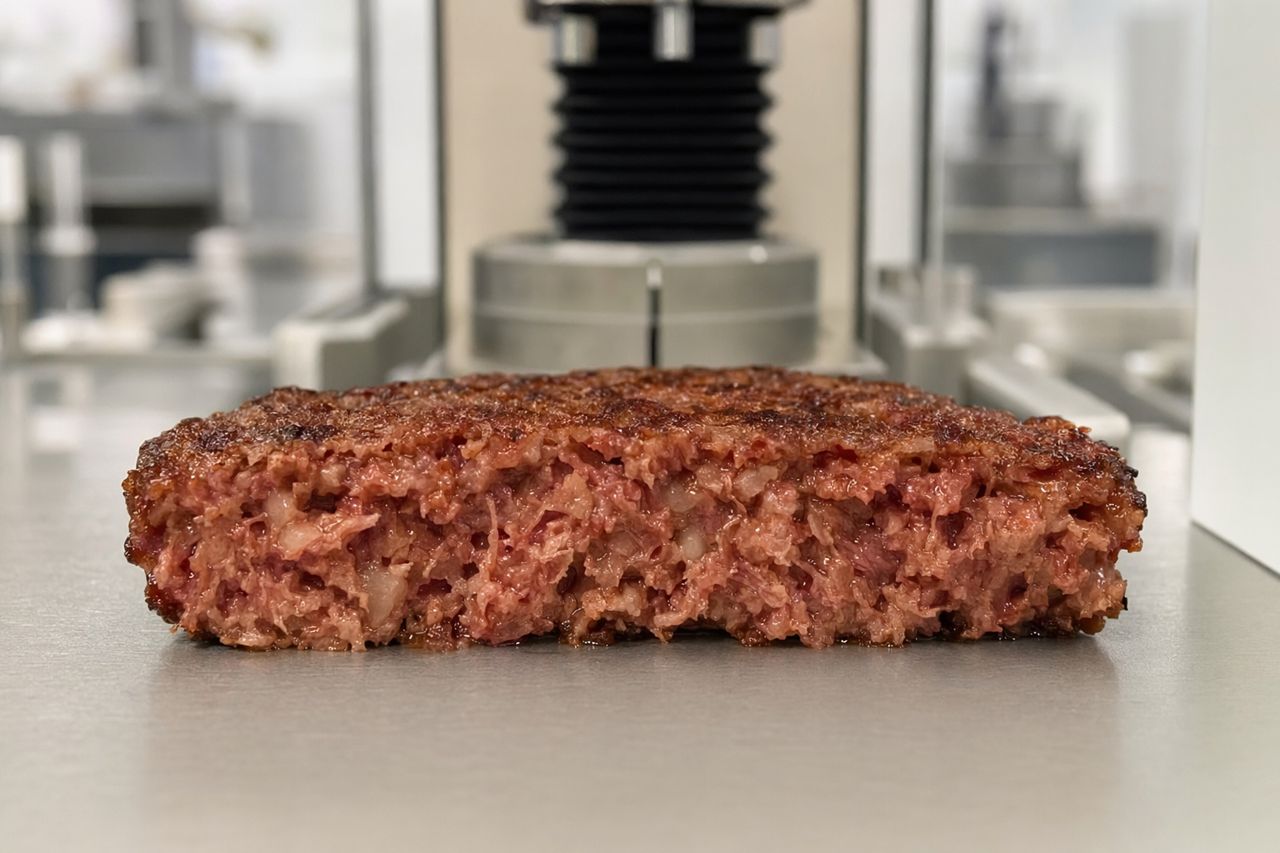
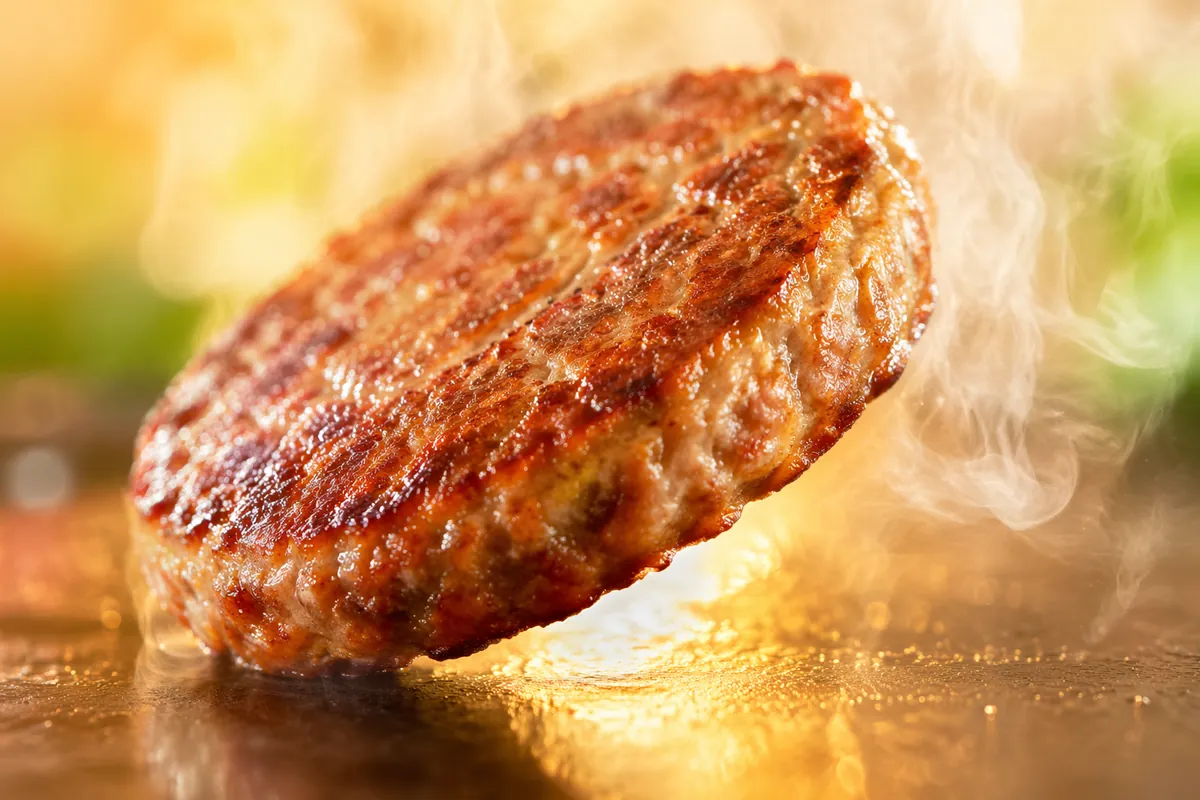
Burgers need visible fat behavior, surface sizzle and internal juiciness. The matrix must be cohesive enough for forming and packaging, but not so dense that cook loss translates into a tough center. Enzyme selection should support bite integrity while allowing a clean release of moisture and fat during cooking.
Sausages and links
Sausage systems require stable emulsification, casing compatibility and a bite that cuts rather than collapses. Fat release must be delayed until the thermal set is established. Enzyme-supported protein functionality can help manage firmness, sliceability and purge control.
Mince and crumbles
Mince needs particle definition after cooking and reheating. Too much binding creates rubbery clusters; too little creates mush or oil-out. The fat system should lubricate the bite without erasing particle identity.
Whole-cut analogues
Whole-cut formats depend on fiber alignment and layered structure. Fat has to sit between or within protein strands without disrupting anisotropy. Enzyme work in this format is often about improving strand cohesion, hydration control and thermal resilience.
Where Enzymes Fit in the Development Map
A practical enzyme program does not begin with a catalog search. It begins with a texture target and a process map.
Key questions include:
- What is the target bite: fibrous, tender, snappy, minced, layered or sliceable?
- Which protein sources are carrying the structure?
- When is fat introduced, and in what physical state?
- What temperature exposure occurs before, during and after forming?
- Where does the current formula fail: mixing, extrusion, forming, cooking, storage or reheating?
- How much variation appears between protein lots?
Once those points are defined, enzyme candidates can be screened against real process constraints rather than ideal bench conditions.
Designing for Controlled Release
The best plant-based meat systems do not simply hold water and fat. They release them at the right moment.
A matrix that binds too aggressively may show strong yields but eat dry. A matrix that releases too early may show good first-bite juiciness but poor packaging stability. The development target is controlled release: enough retention for manufacturing and distribution, enough mobility for a savory, juicy bite.
Enzymefusion helps manufacturers evaluate enzyme-supported texture routes against practical factory outcomes such as:
- Forming performance
- Cook loss behavior
- Bite firmness and tenderness
- Slice and cut quality
- Fat bleed timing
- Freeze-thaw stability
- Batch-to-batch consistency
- Compatibility with extrusion or mixing conditions
Scale-Up Realities: What Changes from Lab to Line
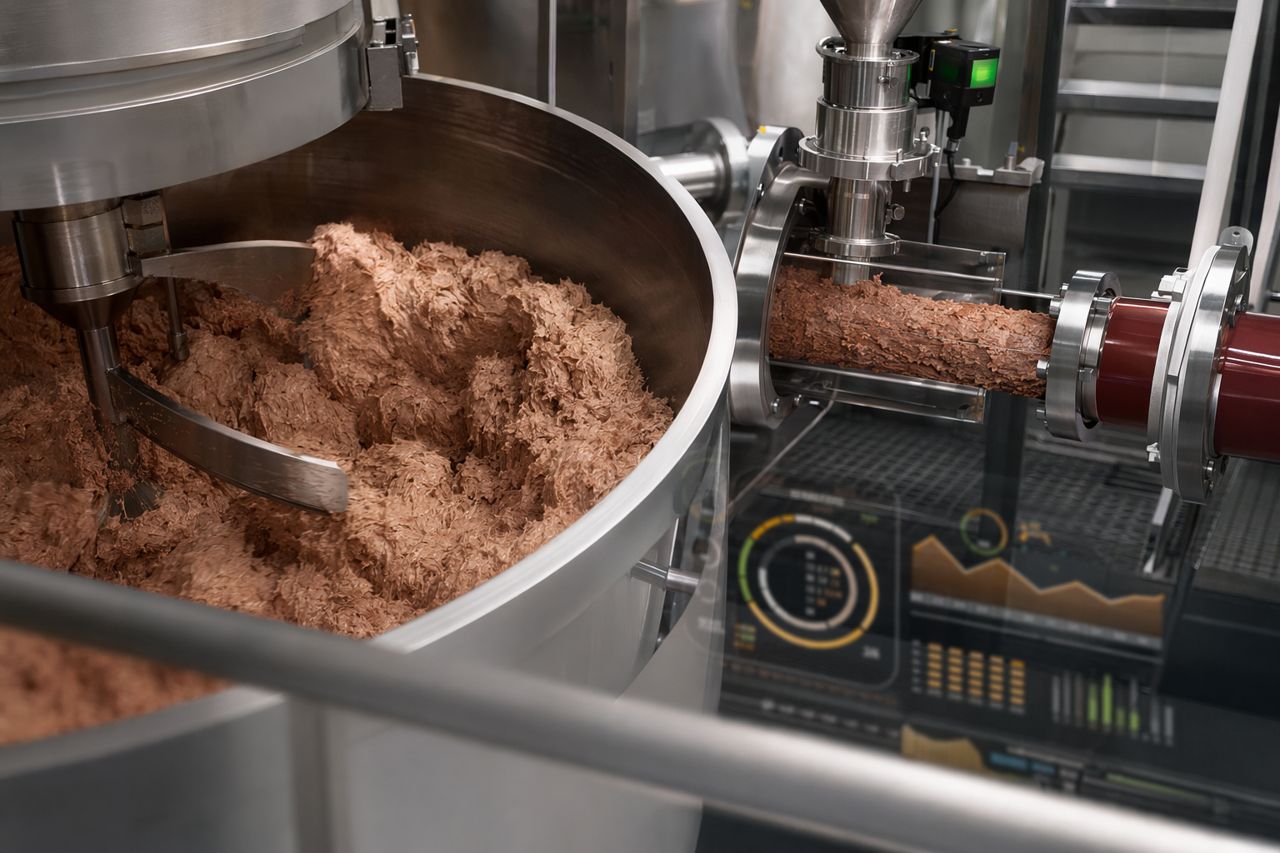
At larger scale, fat and protein experience different residence times, shear exposure and heat transfer. A formula that performs in a benchtop mixer may change when moved through jacketed tanks, continuous extrusion, chilled conveying, high-speed forming or industrial cooking.
Scale-up variables that matter:
- Mixing order and hydration time
- Protein preconditioning
- Fat temperature at addition
- Shear intensity and residence time
- Ingredient particle size distribution
- Thermal ramp and hold profile
- Post-forming chill or set time
- Packaging format and storage temperature
An enzyme system should be evaluated inside this process reality. Enzymefusion’s role is to help technical teams narrow the options, define practical trials and interpret texture outcomes in the context of plant-based meat factory constraints.
Procurement Criteria for Enzyme Supply
For B2B buyers, enzyme sourcing is not only about technical fit. It is also about documentation, reliability and scale readiness.
When selecting an enzyme partner, plant-based meat teams should consider:
- Application familiarity with plant proteins and structured meat analogues
- Ability to support pilot and production trials
- Consistent supply and batch documentation
- Clear handling guidance for manufacturing teams
- Compatibility discussion across proteins, fats, salts and thermal steps
- Technical responsiveness during troubleshooting
The right enzyme supplier should understand formulation language and production language. Both are required to move from prototype texture to repeatable factory output.
Enzymefusion Perspective
Fat systems define the first impression. Protein networks define the bite. Enzymes help tune the interface between the two.
For plant-based meat factories, the commercial value is not novelty. It is tighter process control: fewer texture surprises, more predictable juiciness, cleaner fat behavior and a clearer path from R&D bench to production line.
If you are developing or scaling burgers, sausages, mince, whole-cut analogues or hybrid plant-protein formats, Enzymefusion can help you evaluate enzyme routes around your process window and target sensory profile.
Planning a formulation trial, a supplier review or a bulk order? Request a quote through the inquiry form: send the enzyme or the texture problem, the quantity, the destination country, and your protein system, fat format and product type. We reply by email; pack size and delivery are quoted per order.