Bulk Enzyme Options for Plant-Protein Texture and Binding
Plant-protein meat systems are built at the intersection of hydration, shear, heat, salt, oil structuring, and protein functionality. Enzymes can help factories tune that intersection when standard ingredient swaps stop producing meaningful gains.
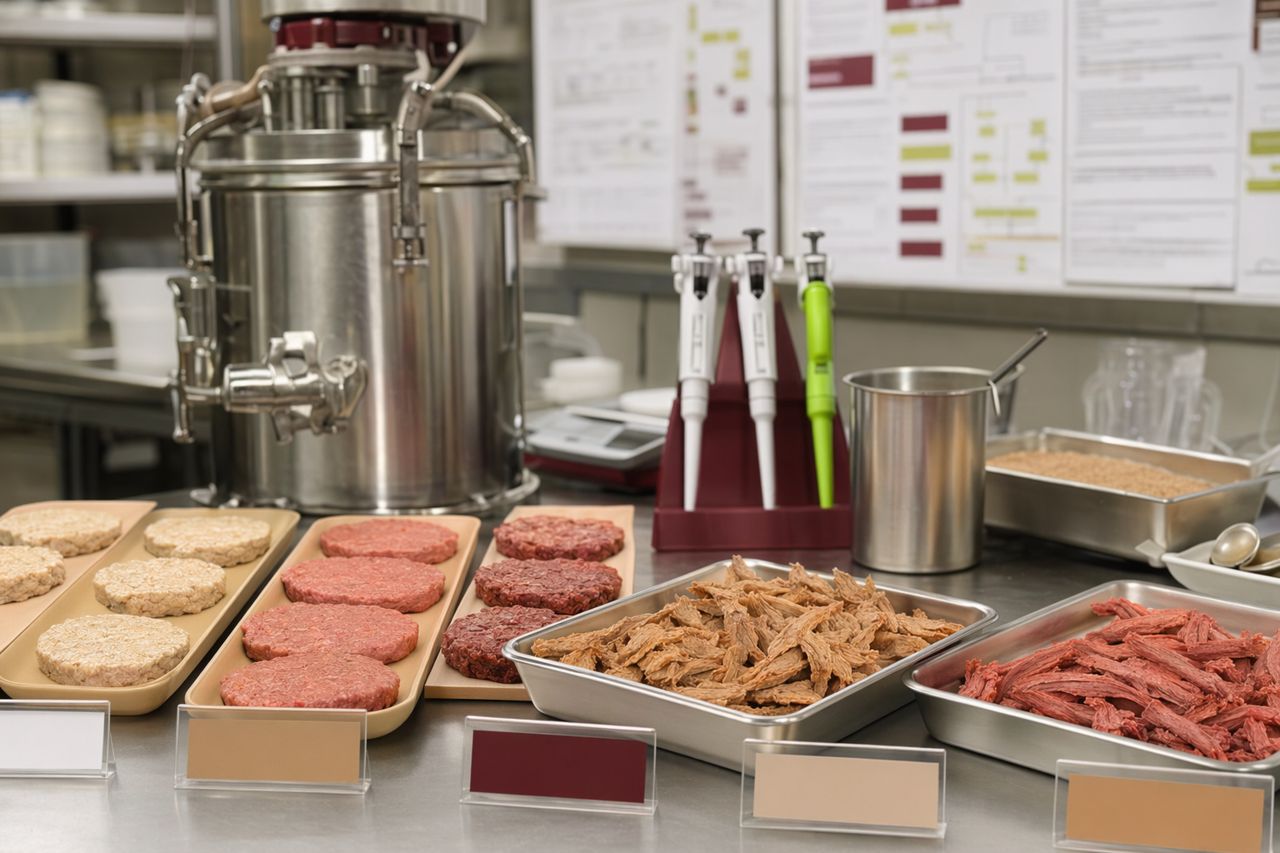
Enzymefusion supports R&D, process, and procurement teams evaluating enzyme-assisted binding and texture development for burgers, grounds, strips, chunks, nuggets, deli-style formats, and hybrid analog systems. We focus on practical factory outcomes: cohesive bite, reduced crumble, improved juiciness retention, cleaner forming, and more stable performance across scaled production windows.
If you are looking for an enzyme supplier for plant based meat manufacturing, Enzymefusion helps you compare bulk enzyme options by application fit, processing tolerance, handling requirements, and commercial readiness—without requiring disclosure of proprietary activity units, assay methods, or manufacturer identities.
Where Enzymes Fit in Plant-Protein Texture Design
Texture failure in plant-based meat rarely comes from one variable. It usually appears as a combined system issue:
- Protein particles hydrate unevenly
- Fibers fail to align under shear
- The matrix breaks during forming or cooking
- Oil separates during thermal processing
- Bite becomes either rubbery, pasty, or brittle
- Scale-up shifts residence time, temperature exposure, or mixing energy
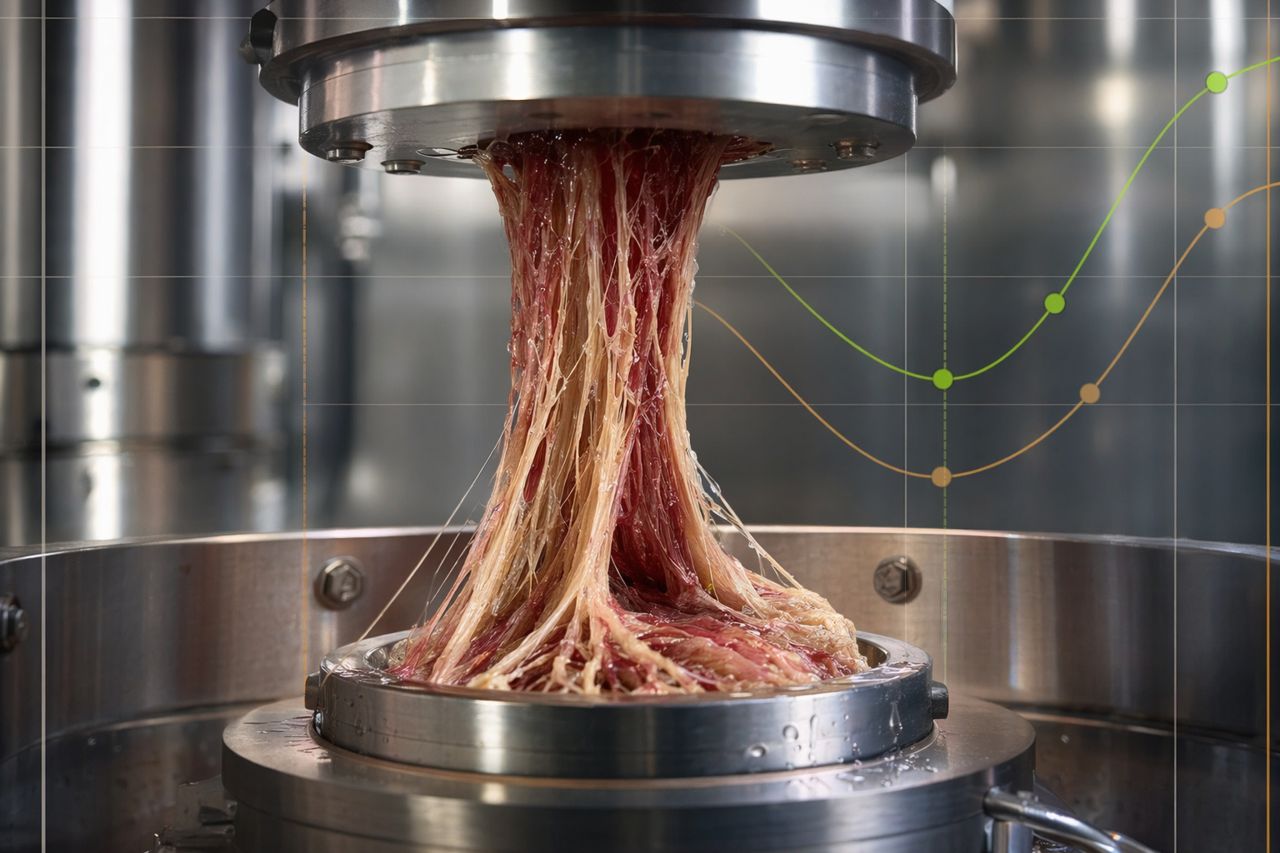
Enzyme-assisted systems are evaluated to help modify protein interactions, improve matrix continuity, or support binding between dispersed plant-protein phases. The goal is not to make the enzyme the hero ingredient. The goal is to create a more controllable formulation window.
Texture and Binding Targets We Help Factories Evaluate
Cohesion Without Excess Gumminess
Many plant-protein systems need stronger internal binding but cannot tolerate a gummy or over-tight gel. Enzymefusion helps teams evaluate enzyme options that support structure while preserving chew, grain, and release.
Typical development objectives include:
- Better patty integrity during forming and freezing
- Reduced crumble in grounds and minced formats
- Improved cut surface definition in strips and chunks
- More elastic bite without rubbery compression
- Cleaner handling through depositor, former, or extruder interfaces
Bite Development in High-Moisture and Low-Moisture Processes
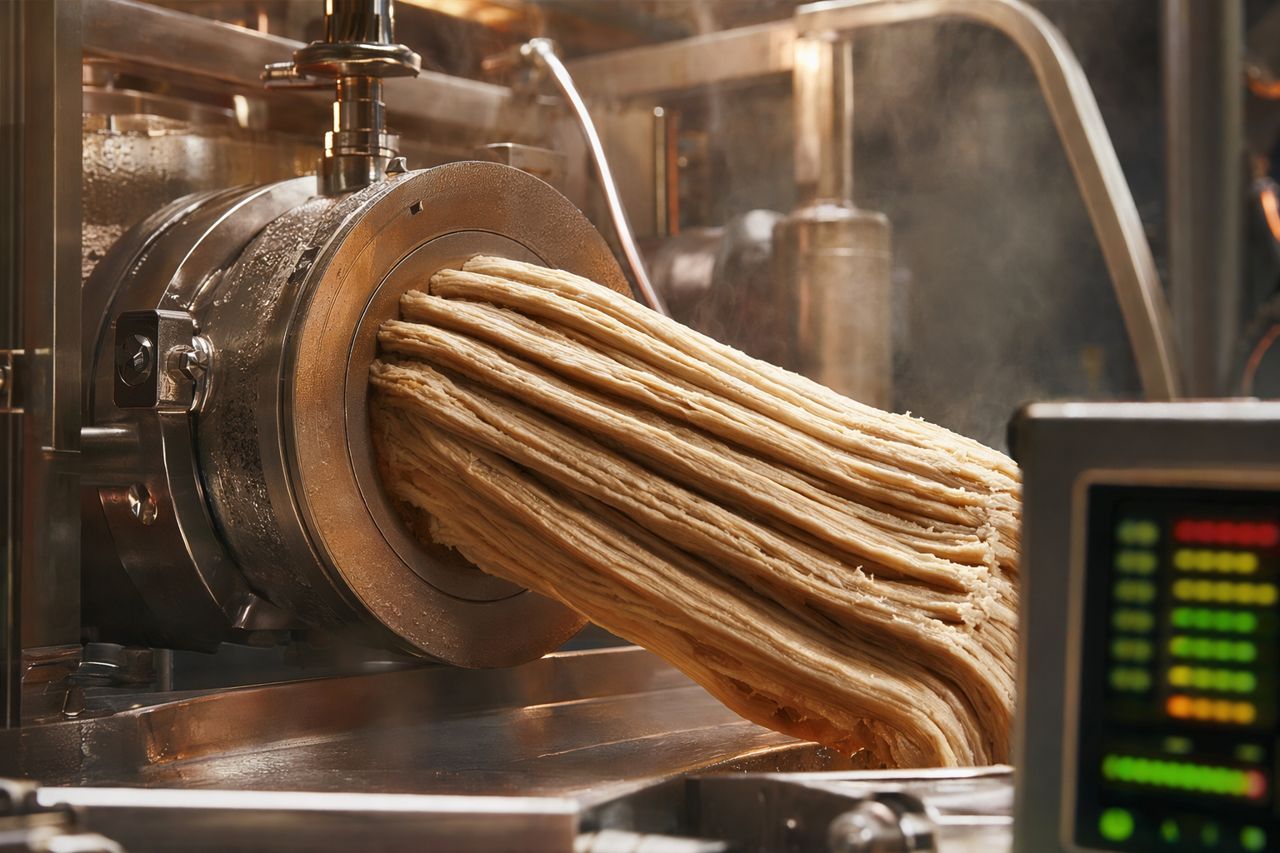
High-moisture extrusion, shear-cell processing, and low-moisture texturization each create different constraints. Temperature exposure, water activity, protein type, and shear history determine whether an enzyme strategy is realistic.
Enzymefusion evaluates enzyme candidates against the process reality, not just the bench concept. We consider where the enzyme can be introduced, when it has access to hydrated substrate, how it behaves through thermal steps, and whether the desired effect survives downstream handling.
Binding Across Mixed Protein Systems
Pea, soy, wheat, fava, mung, chickpea, rice, and blends all behave differently. Protein isolates, concentrates, flours, and textured particulates also vary by supplier and lot. Enzyme-assisted binding must be assessed against those differences.
We help manufacturers define practical screening questions:
- Does the enzyme support the target protein system or only a narrow substrate condition?
- Does the response remain useful when salt, oil, flavors, colors, or fibers are added?
- Does it improve binding without masking desired fibrousness?
- Does it create margin in the process, or does it add sensitivity?
Factory Evaluation Without Activity Unit Disclosure
Enzymefusion does not require teams to publish or exchange proprietary enzyme activity units, assay methods, or manufacturer information during early evaluation. Instead, we structure discussions around formulation role, process fit, handling form, regulatory needs, and observed performance targets.
This makes supplier qualification easier for cross-functional teams that need useful technical comparison without exposing confidential supplier data.
Evaluation inputs may include:
- Product format and target bite profile
- Protein sources and approximate inclusion ranges
- Moisture, oil, salt, and binder architecture
- Thermal process type and relevant process windows
- Point of addition and mixing sequence
- Desired label, regional, and procurement constraints
- Current failure mode: crumble, pastiness, oiling-out, weak chew, poor forming, or inconsistency
Bulk Enzyme Selection Criteria
Application Fit
Not every enzyme that modifies protein behavior is appropriate for plant-based meat. Enzymefusion prioritizes options that can be assessed in real food matrices, under realistic process timing, and with attention to finished texture.
Process Tolerance
The useful question is not whether an enzyme works in isolation. The useful question is whether it can produce the intended effect inside your actual plant-protein process. We look at compatibility with hydration, mixing energy, heat exposure, hold time, and downstream forming or extrusion.
Handling and Scale-Up
Bulk enzyme supply must fit factory operations. Powder flow, dust control, dispersion, batching accuracy, storage conditions, and operator handling all matter when moving from benchtop trials to commercial production.
Commercial Readiness
For procurement and quality teams, an enzyme option must be supportable beyond the R&D bench. Enzymefusion helps align technical selection with documentation expectations, supply planning, and quote-ready volumes.
Common Use Cases
Enzymefusion supports enzyme evaluation for:
- Plant-based burger patties needing better forming strength
- Grounds and crumbles requiring improved cohesion after cooking
- Fibrous strips or shreds with weak strand integrity
- Nuggets and formed pieces that break during coating or frying
- Hybrid analog systems where plant proteins must bind with other matrix components
- High-moisture extruded materials requiring more stable post-process bite
- Reformulations where hydrocolloid reduction changes texture stability
Development Pathway
1. Define the Failure Mode
We start with the exact production issue: weak bite, brittle fracture, pasty chew, oil release, poor freeze-thaw stability, or process inconsistency.
2. Map the Process Window
We identify where enzyme exposure is possible and where process conditions may limit performance. This includes hydration sequence, mixing, temperature exposure, shear, residence time, and forming method.
3. Select Candidate Options
We recommend bulk enzyme options by functional role and process suitability. The discussion stays focused on application performance and commercial fit rather than proprietary assay disclosure.
4. Run Structured Trials
Your team can compare candidates against internal controls using your preferred texture measurements, sensory targets, cook performance, yield metrics, and processing observations.
5. Move Toward Quote and Supply Planning
Once the technical direction is clear, Enzymefusion supports quote preparation for bulk supply, documentation review, and practical next steps for plant implementation.
Why Enzymefusion
Enzymefusion is built for technical buyers in plant-based meat manufacturing. We understand that texture is engineered, not guessed. Enzyme selection has to work inside your formulation constraints, your equipment reality, and your commercial timeline.
Our role is to help teams narrow the field, avoid irrelevant enzyme options, and move from exploratory screening to quote-ready supply with less friction.
Request a Quote
If you are evaluating enzyme-assisted texture or binding for a plant-protein meat process, send us your product format, protein system, target texture, and current production challenge.
Request a quote through the on-site form
A Enzymefusion technical contact will review the application and respond with relevant bulk enzyme options for your manufacturing context.