Plant-Based Meat Enzyme Procurement Checklist
Enzymes can be highly useful in plant-based meat manufacturing, but they should not be purchased like generic processing aids. The right enzyme choice depends on your protein base, hydration strategy, shear history, heat profile, texture target, and finished-product format.
Enzymefusion supports R&D, procurement, QA, and plant teams that need a practical path from evaluation to purchase. Use this checklist to define the non-confidential information needed for application fit, documentation review, handling readiness, internal trial design, and ordering.
If you are looking for an enzyme supplier for plant based meat manufacturing, this page is designed to help your team specify the request clearly before a quote is issued.
1. Confirm the application fit
Before requesting pricing, align internally on what the enzyme is expected to improve. Enzymes are not texture magic; they are process tools that work within defined formulation and thermal windows.
Define the product format
Provide the intended format so the recommendation can be framed around real processing conditions:
- High-moisture extruded meat analogues
- Low-moisture TVP-based systems
- Formed patties, grounds, crumbles, strips, or chunks
- Sausage-style emulsified systems
- Hybrid systems using plant proteins with fats, binders, fibers, flavors, or inclusions
- Coated, marinated, frozen, chilled, or retorted finished products
Identify the texture objective
Clarify the target in manufacturing language, not consumer language:
- Increased bite firmness
- Improved strand cohesion
- Reduced crumbling during forming or cooking
- Cleaner slice or shred behavior
- Better water management during thermal processing
- Improved chew recovery after freezing and reheating
- Reduced paste-like texture in high-hydration systems
- More controlled softening in dense protein matrices
Share the protein and binder system
Enzymefusion can evaluate compatibility more effectively when your team shares non-confidential formulation context, such as:
- Primary protein source: soy, pea, wheat, faba, mung, chickpea, canola, rice, mycoprotein, or blends
- Protein format: isolate, concentrate, flour, textured protein, slurry, or extrudate
- Key structuring ingredients: methylcellulose, starches, fibers, hydrocolloids, oils, or emulsifiers
- Salt, acid, sugar, or phosphate presence where relevant
- pH range, if known
- Typical hydration level or moisture band
You do not need to disclose the full formula to begin procurement screening. A functional summary is usually enough for an initial fit discussion.
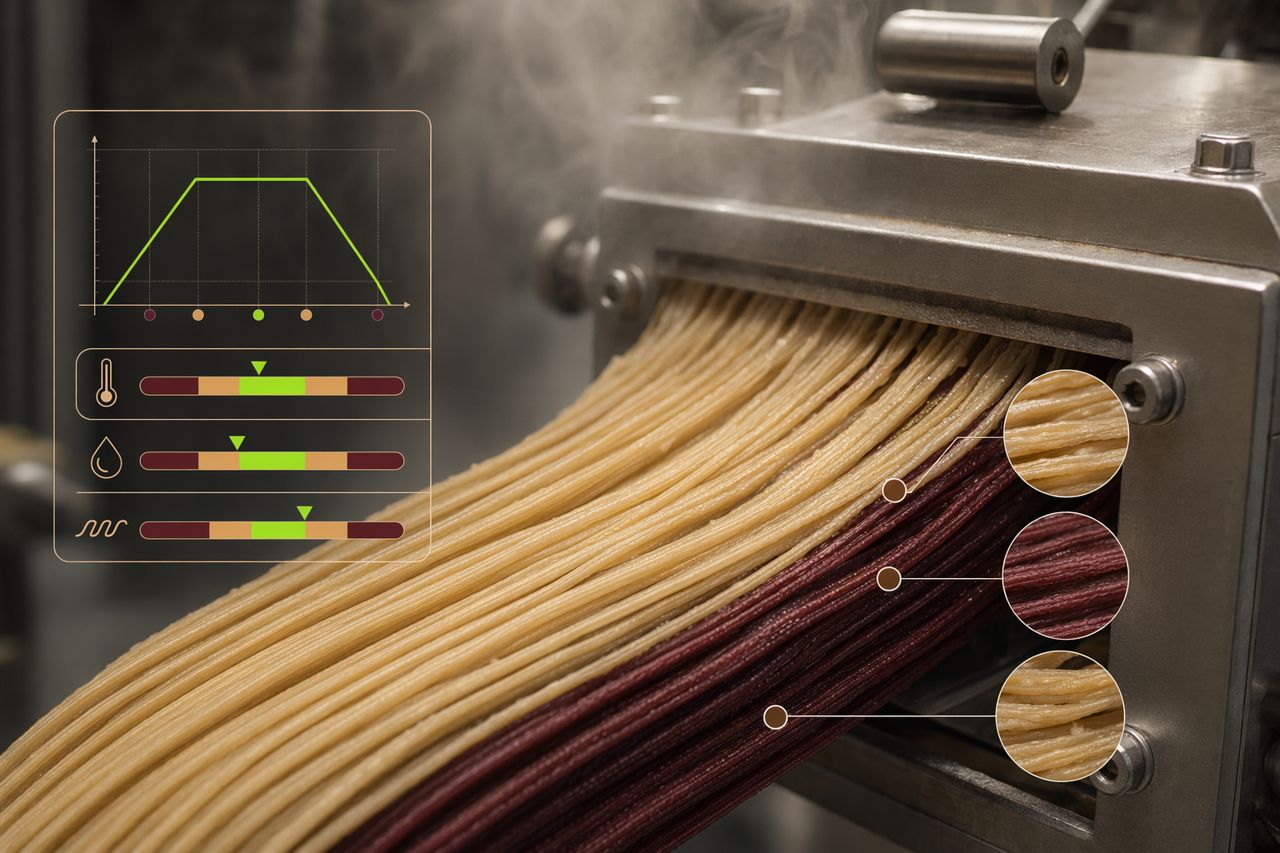
2. Map the process window
Enzyme selection is shaped by when the ingredient enters the process and what conditions it experiences before inactivation or carry-through.
Capture the process sequence
Document where the enzyme may be added:
- Dry blending
- Slurry preparation
- Protein hydration
- Pre-conditioning
- Extrusion feed
- Post-extrusion mixing
- Forming or stuffing
- Marination or surface treatment
- Thermal set, cook, pasteurization, or retort step
Capture the relevant conditions
For procurement screening, summarize the practical operating range:
- Mixing time and residence time
- Hydration time before shear
- Temperature exposure before final heating
- Shear intensity or extrusion severity in plain operating terms
- Target pH band
- Salt and fat level where they affect dispersion or reaction behavior
- Final cook or heat-set profile
- Chilled, frozen, ambient, or retorted distribution path
This helps prevent a mismatch between a promising bench ingredient and a plant process that gives it too little time, too much heat, or poor dispersion.
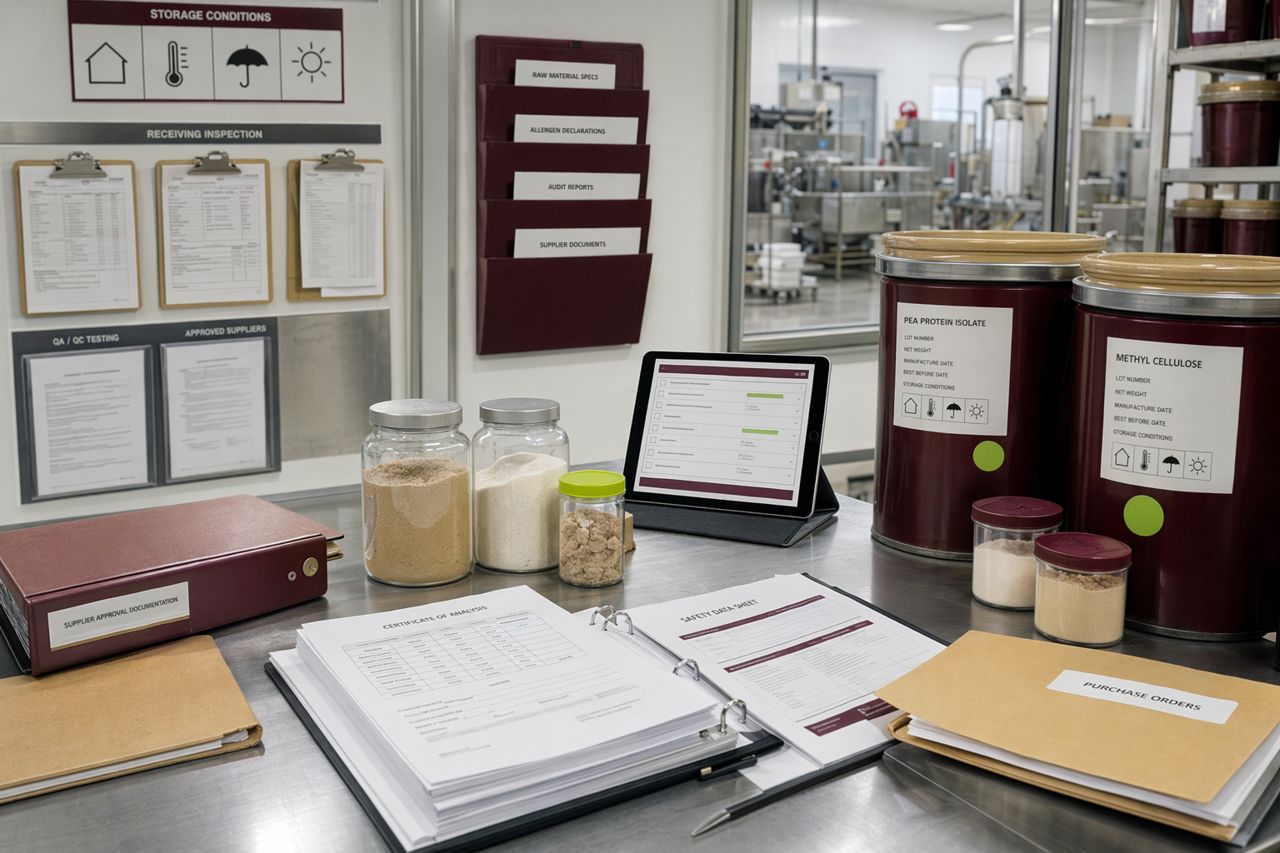
3. Define documentation requirements early
Procurement should confirm documentation expectations before samples or purchase orders move forward. This reduces delays between R&D approval, QA review, and plant release.
Typical documents to request
Ask Enzymefusion for the documentation package appropriate to your region, customer base, and internal policies. Common requirements may include:
- Product specification sheet
- Safety data sheet
- Allergen statement
- GMO status statement where applicable
- Vegan or plant-based suitability statement where applicable
- Country of origin information
- Ingredient or processing aid declaration guidance, as applicable
- Food-grade or food-processing suitability documentation
- Lot traceability information
- Certificate of analysis format
- Shelf-life and recommended storage guidance
- Packaging configuration information
Regulatory and customer alignment
Your team remains responsible for final label, regulatory, and customer approval. Enzymefusion can provide product documentation to support that review, but the acceptance criteria may vary by market, claim set, distribution channel, and customer specification.
4. Plan handling and storage before samples arrive
Enzyme performance depends on controlled handling. Procurement should verify that the receiving site can store and use the material correctly before it enters R&D or production trials.
Receiving checklist
Confirm the following:
- Correct product name and lot number on arrival
- Packaging intact and sealed
- Storage conditions reviewed before receipt
- Internal owner assigned for sample or inventory control
- QA hold-and-release process defined if required
- Material logged into the trial or purchasing system
Storage planning
Plan storage around the product-specific guidance provided with the quote or documentation package. Key questions include:
- Does the material require refrigerated, frozen, or cool dry storage?
- Is humidity control important for the packaging format?
- What is the expected shelf life under recommended conditions?
- How should opened packaging be resealed or managed?
- Who controls access to the enzyme in the pilot plant or production area?
Handling in the plant
For internal SOP planning, define:
- PPE requirements from the safety data sheet
- Dust-control or splash-control practices depending on format
- Addition method and dispersion step
- Pre-blend or pre-dilution approach, if recommended
- Clean-down expectations after use
- Segregation from incompatible ingredients or environments
5. Design an internal trial that procurement can support
A good trial does more than ask whether the enzyme “works.” It defines the baseline, the target, the test matrix, the processing conditions, and the decision criteria.
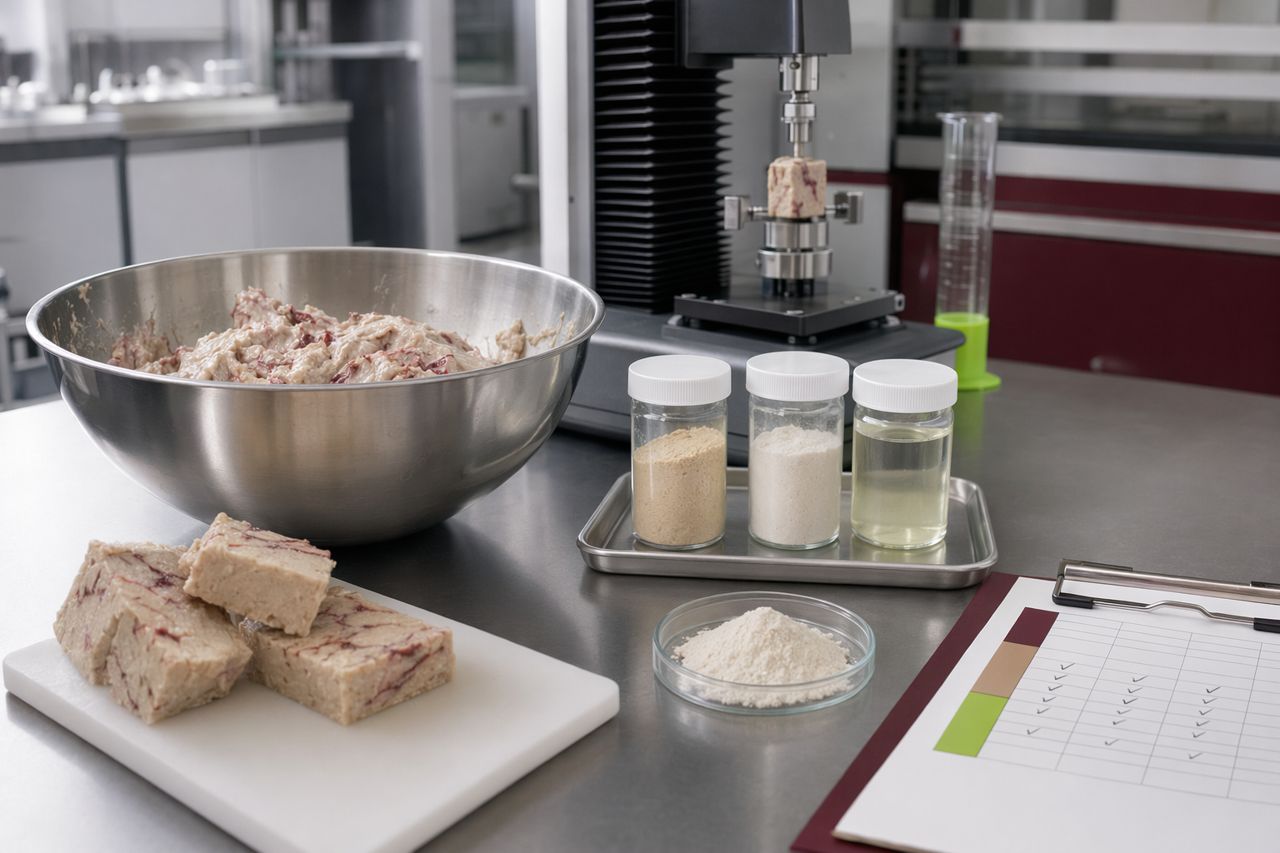
Start with a baseline
Document the current control product:
- Formula version
- Protein source and supplier lot, if relevant
- Hydration and mixing sequence
- Thermal process
- Forming or extrusion parameters
- Texture issue being addressed
- Current quality measurements or sensory panel notes
Build a practical test matrix
Keep the first screen focused. Too many variables can obscure whether the enzyme is suitable. Consider comparing:
- Control with no enzyme
- Low, medium, and high inclusion bands based on supplier guidance
- One or two addition points
- One standard process and one modified process window
- Finished product after initial cook and after intended storage or reheating
Avoid changing protein source, binder system, moisture, and enzyme condition all at once unless the trial is specifically designed as a formulation reset.
Define decision criteria
Before testing, agree on what success means:
- Texture profile target
- Processability during mixing, extrusion, forming, or stuffing
- Cook yield or purge behavior
- Freeze-thaw stability
- Cut, shred, bite, or crumble performance
- Flavor neutrality or interaction with savory systems
- Compatibility with existing plant equipment
- Cost-in-use range acceptable to procurement
This is where R&D and procurement should work together. A technically strong enzyme is not ready for scale-up if it creates handling complexity, supply risk, or plant workflow friction.
6. Prepare the quote request
A clear quote request lets Enzymefusion respond with fewer clarification cycles.
Include these basics
When contacting Enzymefusion, include:
- Company name and manufacturing location
- Product category and format
- Target texture or process challenge
- Protein system summary
- Intended addition point
- Trial scale and expected production scale
- Required documentation list
- Preferred packaging size or estimated monthly usage, if known
- Required delivery destination
- Target timing for samples, technical review, or purchase
What not to send initially
Do not send confidential formulas, proprietary process files, or customer-restricted data unless an appropriate agreement is in place. Enzymefusion can begin with a non-confidential technical screen and move into deeper support if needed.
7. Align procurement, R&D, QA, and production
The most successful enzyme adoption projects have a shared internal owner and a clear handoff path.
Recommended internal workflow
- R&D defines the texture or processing target.
- Procurement requests product availability, packaging, pricing, and lead time.
- QA reviews documentation and receiving requirements.
- R&D runs a controlled bench or pilot trial.
- Production reviews addition point, handling, and scale-up fit.
- Procurement confirms forecast, order quantity, and delivery plan.
- QA releases the material under internal controls.
- Plant team verifies performance at scale.
Common procurement blockers
Address these early:
- Documentation gaps
- Unclear regulatory status for target market
- Storage mismatch at the receiving facility
- Sample approved but production packaging not approved
- Trial success based on a formula no longer used
- Addition step that cannot be replicated at scale
- Lead time not aligned with launch calendar
8. Scale-up questions to ask before purchase
Before moving from trial to purchase order, confirm:
- Is the enzyme still compatible with the final formula?
- Does the production process give the enzyme the same opportunity to function as the pilot process?
- Will dispersion remain consistent at larger batch size?
- Is the inactivation or final heat step appropriate for the product design?
- Can operators add the enzyme safely and repeatably?
- Is the packaging size practical for batch use and inventory control?
- Are lead times compatible with production planning?
- Has QA approved the documentation package?
Why Enzymefusion
Enzymefusion is built for technical procurement in plant-based meat manufacturing. We help teams evaluate enzyme fit around actual formulation constraints, not generic ingredient descriptions. Our support is structured for R&D-native communication, QA documentation review, and practical ordering workflows.
If your team needs an enzyme supplier for plant based meat manufacturing, Enzymefusion can help you move from application question to quote-ready specification.
Request a quote
Use the on-site request form to share your product format, target texture, protein system, trial scale, documentation needs, and delivery location. Enzymefusion will review the request and respond with the next step for quoting, sample discussion, or technical clarification.