Scaling Plant-Based Meat Texture from Bench Top to Pilot Plant
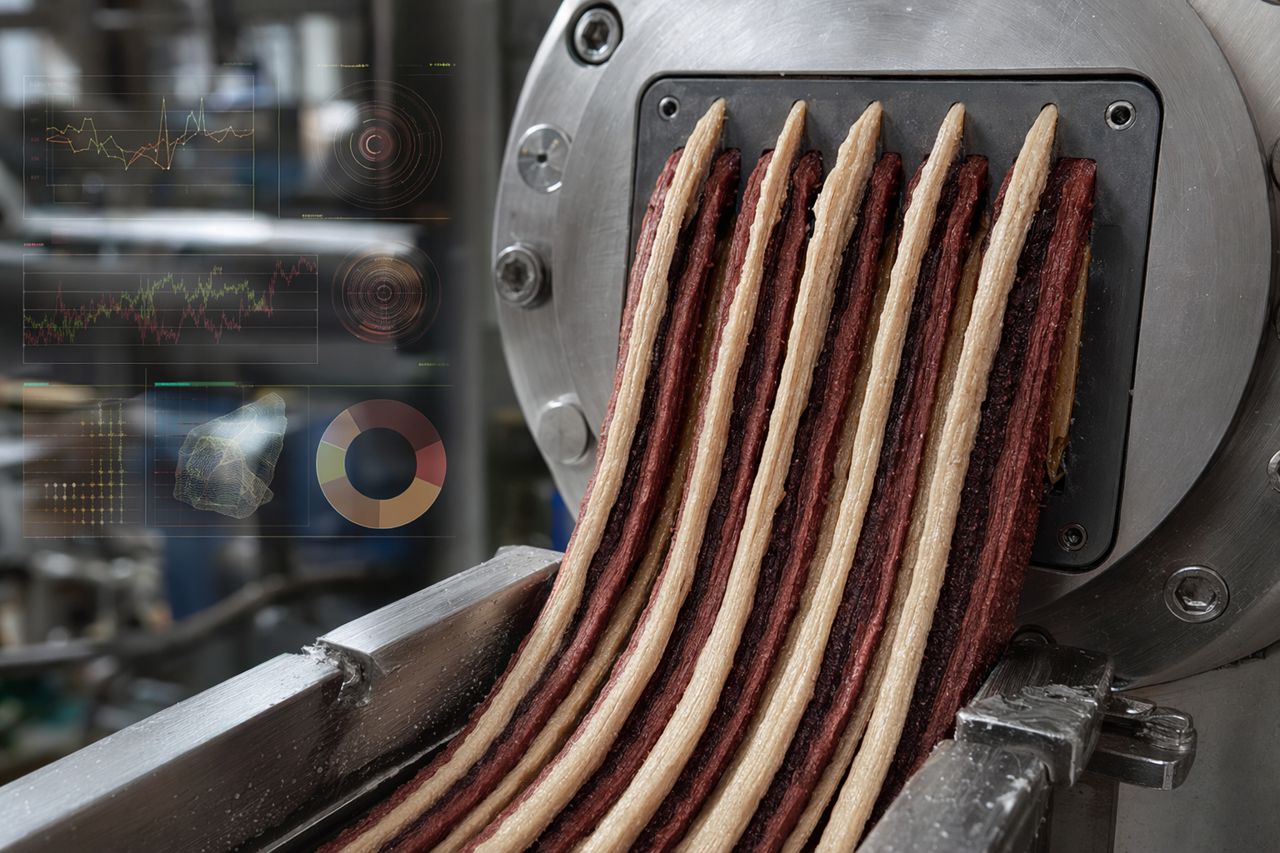
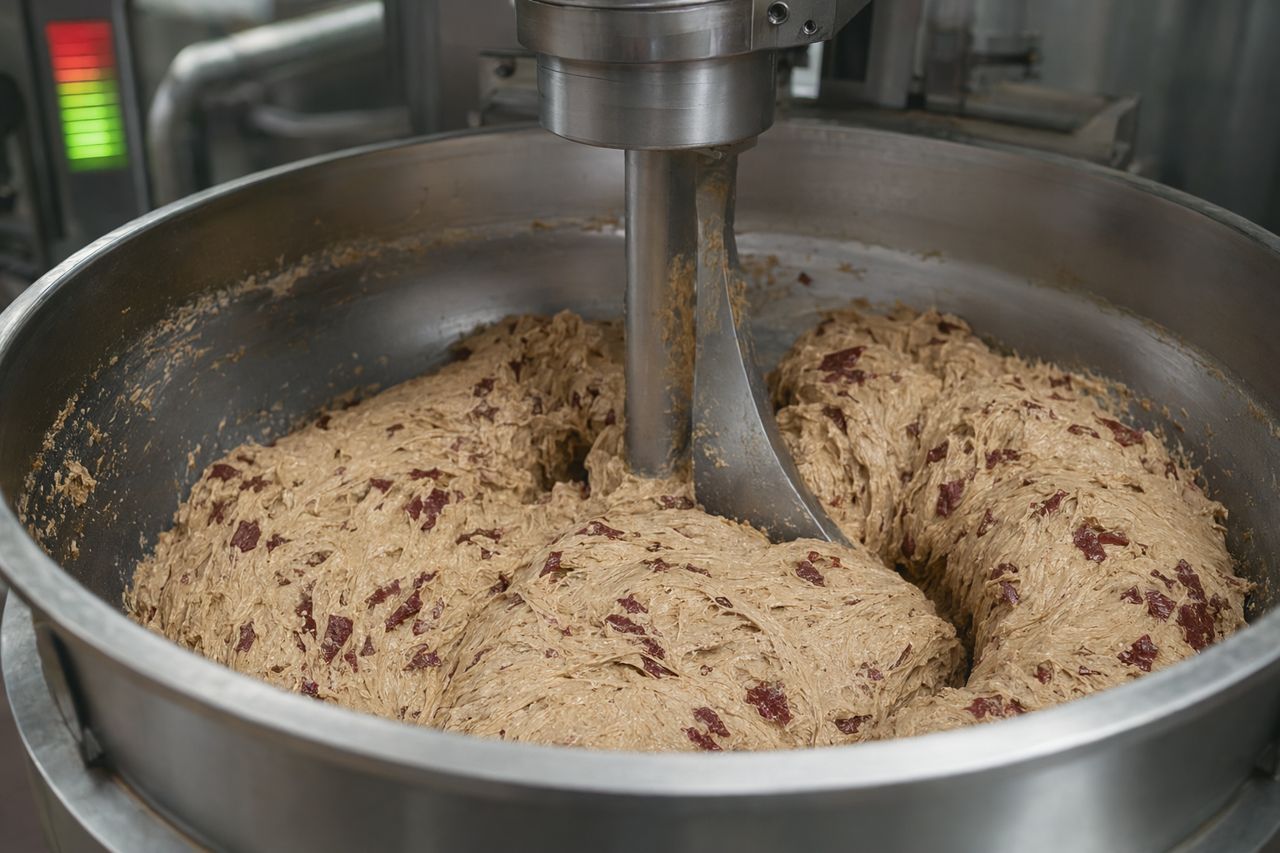
Bench-top texture is often the easiest version of the product to love. The batch is small, the hydration is watched closely, and the material can be adjusted by feel. Pilot scale removes that intimacy. Residence time shifts. Shear history changes. Heat transfer is less forgiving. A formulation that looked fibrous in a lab bowl can become smeared, brittle, rubbery, or wet once it moves through pilot equipment.
For plant-based meat manufacturers, scale-up is not only a question of ingredient percentages. It is a structure problem. Enzymes can help when they are specified around the texture target, the process window, and the actual manufacturing sequence.
Enzymefusion supplies enzymes in bulk to plant-based meat manufacturers, co-packers and ingredient resellers, and supports their R&D, process development and purchasing teams with a practical understanding of extrusion, forming, hydration and chilled handling.
Wholesale and bulk supply for manufacturers, co-packers and resellers. Enzymefusion supplies these enzymes by quote only; pack size, volume and delivery are quoted per order. To get a quote, send the product, the quantity and the destination country through the inquiry form.
Why bench texture breaks during scale-up
Plant-protein systems are sensitive to small changes in how water, heat, shear, and time interact. At bench scale, the operator can compensate manually. At pilot scale, the process starts to expose weaknesses in the architecture of the formula.
Common scale-up failures include:
- Fiber loss: aligned strands become short, smeared, or paste-like after a change in shear profile.
- Rubbery bite: excessive network tightening creates bounce without a clean fibrous pull.
- Brittle fracture: the matrix sets too hard and breaks instead of tearing.
- Wet release: bound water separates during cooling, slicing, packaging, or reheating.
- Inconsistent marbling: fat phase distribution becomes unstable when throughput and temperature change.
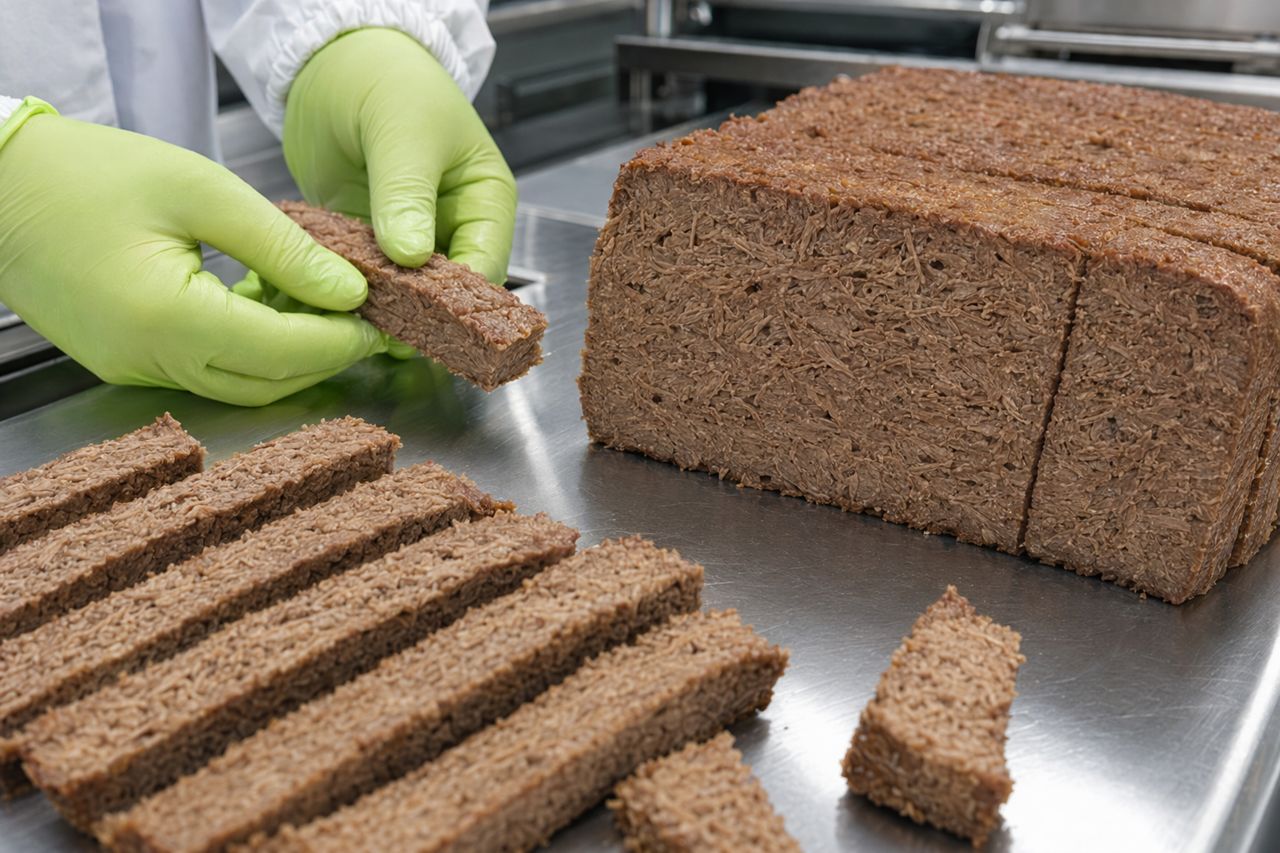
- Poor slice integrity: loaves, chunks, or cut pieces deform during post-process handling.
These are not isolated formulation defects. They are signs that the structure-building mechanism is not aligned with the scale-up environment.
Where enzyme systems fit
In plant-based meat manufacturing, enzymes are most useful when they are treated as process tools rather than simple ingredient additions. Their role is to influence how proteins interact during mixing, hydration, heating, cooling, and post-forming.
Depending on the product architecture, enzyme systems may be used to support:
- controlled protein network formation
- improved strand definition in fibrous matrices
- firmer bite without excessive rubberiness
- better cohesion in formed pieces
- reduced crumbling after chilling or slicing
- cleaner water management across thermal processing
- more stable texture after pilot-scale hold times
The value is not just stronger texture. The value is a more predictable path from prototype to plant trial.
Start with the texture target, not the ingredient list
A scale-up program should define the desired eating and handling performance before enzyme selection begins. Texture language needs to be specific enough for formulation and operations teams to act on it.
Useful targets include:
- Fibrous pull: visible strand alignment and directional tear.
- Cut surface integrity: clean slicing without paste drag or edge collapse.
- Juiciness retention: moisture held through chilling, reheating, and bite.
- Elastic limit: firmness without a rubber band effect.
- Chunk cohesion: formed pieces that survive tumbling, saucing, or freezing.
- Marbling stability: fat phase distribution that remains visually and mechanically consistent.
Once the target is clear, enzyme selection can be matched to the protein base, hydration sequence, thermal stop point, and equipment constraints.
The process window matters as much as the enzyme
A bench formula may give the illusion of flexibility. Pilot equipment usually proves otherwise. The same enzyme approach can perform differently depending on when it contacts water, how long it remains active before heating, and what shear profile the protein experiences.
During scale-up, Enzymefusion typically evaluates the enzyme route against questions such as:
- When does the enzyme contact the protein system?
- Is the matrix hydrated enough for uniform structure development?
- Does the process allow enough time for the intended network effect?
- Where is the thermal stop point, and is it reliable at pilot scale?
- Will downstream cooling, cutting, or packaging stress the structure?
- Does the enzyme strategy tolerate normal plant variation?
This is the difference between a promising sample and a manufacturable specification.
Bench-to-pilot checkpoints
Use the pilot run to learn how the material behaves under real constraints, not simply to confirm that the bench sample can be made larger.
1. Hydration behavior
Track whether the protein system hydrates evenly before the critical structure-forming step. Uneven hydration can make enzyme performance appear inconsistent when the root cause is water distribution.
2. Mixing and shear response
Observe whether the mass develops alignment, smear, or excessive tightness. The enzyme system should support the desired structure under the actual mechanical history of the process.
3. Thermal control
Confirm that the process reaches a dependable stop point. Texture drift often appears when heating is uneven or when hold time changes between bench and pilot equipment.
4. Cooling and set
Many texture failures appear after the product leaves the hot process. Chilling can reveal brittle fracture, water release, or weak cohesion that was not visible at the extruder, former, or kettle.
5. Cutting, packaging, and rework exposure
Pilot validation should include the real handling sequence. A product that looks correct immediately after forming may fail during slicing, conveying, saucing, or packaging.
Procurement needs technical clarity too
When an enzyme becomes part of the manufacturing specification, procurement teams need more than a product name. They need supply confidence, application fit, documentation support, and a clear route for plant validation.
A qualified enzyme supplier for plant based meat manufacturing should be able to discuss:
- compatibility with the selected protein base
- expected role in the texture system
- processing conditions that support performance
- scale-up risks before the pilot run
- sample planning for formulation trials
- documentation needed for internal review
- continuity of supply for commercial planning
For B2B buyers, the strongest enzyme recommendation is one that reduces uncertainty across R&D, operations, quality, and sourcing.
How Enzymefusion supports scale-up conversations
Enzymefusion works with teams that are moving beyond attractive prototypes and into equipment reality. We focus on the interaction between enzyme function, plant-protein behavior, and the manufacturing window.
Our application discussions typically center on:
- the product format: mince, chunk, strip, fillet, loaf, sausage, or hybrid system
- the protein base and known variability
- the target texture and failure mode
- the intended process sequence
- thermal conditions and stop points
- pilot equipment constraints
- commercial documentation and supply requirements
The objective is straightforward: define an enzyme route that can survive scale-up scrutiny.
Ready to plan a pilot-ready enzyme route?
If your bench-top plant-based meat texture is not translating cleanly to pilot scale, Enzymefusion can help evaluate the structure challenge, recommend an enzyme strategy aligned with your process and quote the volumes for pilot and first production runs.
Request a quote through the inquiry form: send the enzyme or the texture problem, the quantity for pilot and production, the destination country, and your product format, protein base and process outline. We reply by email; pack size and delivery are quoted per order.